:

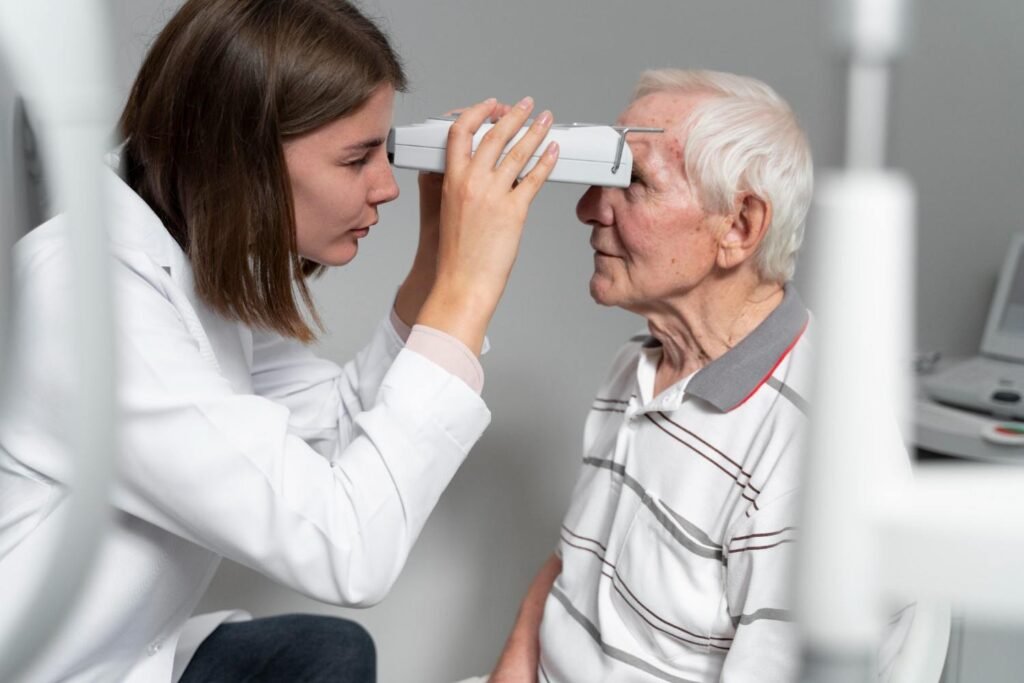
Glaucoma is a group of eye conditions that can damage the optic nerve and may lead to permanent vision loss if it is not detected and managed in time. A Glaucoma Specialist in Sector 51 Gurugram uses a detailed eye examination and specialized diagnostic tests to identify glaucoma, assess the extent of optic nerve damage, and monitor changes over time. Since glaucoma may develop without noticeable symptoms in its early stages, regular eye examinations are important, especially for people with risk factors.
For fast information, direct chat with us on WhatsApp.
What Is Glaucoma?
Glaucoma is associated with progressive damage to the optic nerve, which carries visual information from the eye to the brain. Increased intraocular pressure, or eye pressure, is an important risk factor, but glaucoma can also occur when measured eye pressure is within the usual range.
This is why checking only eye pressure is not enough to diagnose glaucoma. A comprehensive examination may include assessment of the optic nerve, drainage angle, visual field, cornea, and other structures of the eye.
A Glaucoma Specialist in Sector 51 Gurugram considers the findings from these examinations together rather than relying on a single test.
How Does an Eye Specialist Start a Glaucoma Examination?
The diagnostic process usually begins with your medical and eye history. The eye specialist may ask about previous eye conditions, medications, family history of glaucoma, previous eye surgery, and other factors that could affect eye health.
A comprehensive eye examination may then include visual acuity testing, pupil assessment, slit-lamp examination, eye pressure measurement, optic nerve evaluation, and examination of the back of the eye.
If the examination suggests a possible risk of glaucoma, additional tests may be recommended.
Measuring Eye Pressure With Tonometry
Tonometry measures intraocular pressure (IOP), which is one of the important measurements in glaucoma evaluation.
An eye specialist may use different types of tonometers. Goldmann applanation tonometry is considered a standard method for measuring IOP in clinical practice. Non-contact or air-puff tonometry may also be used in some settings.
However, high eye pressure does not automatically mean that a person has glaucoma. Similarly, some people can develop glaucoma despite having eye pressure within the usual range.
Therefore, a Glaucoma Specialist in Sector 51 Gurugram evaluates IOP alongside the optic nerve, visual field, drainage angle, and other findings.
Examining the Optic Nerve
The optic nerve is one of the most important structures examined during glaucoma assessment.
An eye specialist carefully evaluates the optic disc for changes that may be associated with glaucoma. These can include changes in the optic nerve cup, thinning of the neuroretinal rim, asymmetry between the two eyes, or other structural changes.
Optic nerve photographs may also be taken to create a baseline. Comparing images over time can help the specialist identify changes and monitor possible disease progression.
Visual Field Test for Glaucoma
Glaucoma can affect peripheral, or side, vision. A visual field test helps assess how well a person can see objects in different areas while looking at a central target.
During automated visual field testing, the patient responds when they see small points of light. The machine then creates a map of the person’s visual field.
Visual field testing is an important part of glaucoma evaluation and monitoring because it assesses the functional effect of possible optic nerve damage.
A Glaucoma Specialist in Sector 51 Gurugram may repeat visual field testing during follow-up visits to compare results and identify changes over time.
OCT Scan for Glaucoma Diagnosis
Optical Coherence Tomography (OCT) is a non-invasive imaging test that provides detailed cross-sectional images of structures inside the eye.
For glaucoma assessment, OCT can help evaluate the optic nerve and retinal nerve fiber layer. Changes in these structures may provide important information when assessing a glaucoma suspect or monitoring an established condition.
OCT findings are interpreted along with clinical examination and other test results. An abnormal OCT result by itself does not necessarily establish a glaucoma diagnosis.
What Is Gonioscopy?
Gonioscopy allows the eye specialist to examine the drainage angle of the eye. This is important because glaucoma can have different mechanisms, including open-angle and angle-closure forms.
During gonioscopy, a special contact lens is placed on the eye after appropriate preparation. It allows the specialist to view structures that cannot be properly assessed through routine examination.
Gonioscopy is particularly important when determining whether the drainage angle is open or narrow/closed and can help distinguish different types of glaucoma.
Measuring Corneal Thickness
Central corneal thickness, also known as pachymetry, may also be assessed during glaucoma evaluation.
Corneal thickness can influence the interpretation of measured eye pressure. Therefore, understanding the thickness of the cornea can provide additional information when an eye specialist evaluates glaucoma risk and IOP measurements.
This is another reason why glaucoma diagnosis should not be based on eye pressure alone.
Can Glaucoma Be Diagnosed With One Test?
Usually, glaucoma assessment involves combining several pieces of information rather than relying on one test.
For example, an eye specialist may consider:
- Intraocular pressure
- Optic nerve appearance
- Visual field results
- OCT findings
- Drainage angle examination
- Corneal thickness
- Family and medical history
- Previous examination results
Some patients may be considered glaucoma suspects when certain findings or risk factors are present but there is not enough evidence to confirm glaucoma. In such cases, regular follow-up examinations may be recommended to look for changes over time.
Why Early Glaucoma Detection Matters
One of the challenges with glaucoma is that early disease may not cause obvious symptoms. Vision loss associated with glaucoma can be permanent, so detecting structural or functional changes early is an important part of eye care.
If you have a family history of glaucoma, elevated eye pressure, previous eye problems, or other risk factors, discuss appropriate screening with an eye specialist.
A Glaucoma Specialist in Sector 51 Gurugram can perform a comprehensive evaluation and recommend appropriate diagnostic tests based on your individual eye health.
Conclusion
Glaucoma diagnosis involves much more than checking eye pressure. A comprehensive assessment may include tonometry, optic nerve examination, visual field testing, OCT imaging, gonioscopy, and corneal thickness measurement. The results are considered together to determine whether glaucoma or another eye condition may be affecting the optic nerve.
If you have concerns about glaucoma or have been advised to undergo glaucoma testing, consulting a Glaucoma Specialist in Sector 51 Gurugram can help you understand the examination process and the findings relevant to your eye health. Regular eye examinations can also help detect changes before noticeable vision problems develop.
FAQs About Glaucoma Diagnosis
1. Is high eye pressure enough to diagnose glaucoma?
No. High eye pressure is an important risk factor, but glaucoma diagnosis also involves evaluating the optic nerve, visual field, drainage angle, and other clinical findings.
2. Can glaucoma occur with normal eye pressure?
Yes. Some people can develop glaucoma even when measured intraocular pressure is within the usual range. Therefore, a complete eye examination is important.
3. Is an OCT scan useful for glaucoma?
Yes. OCT can provide detailed information about the optic nerve and retinal nerve fiber layer. It is commonly used as part of glaucoma assessment and monitoring.
4. Why is a visual field test performed for glaucoma?
A visual field test evaluates peripheral vision and can help identify functional changes associated with optic nerve damage. It is also useful for monitoring changes over time.
5. How often should glaucoma testing be done?
The appropriate frequency depends on factors such as age, family history, eye pressure, examination findings, and whether a person has glaucoma or is considered a glaucoma suspect. An eye specialist can recommend an appropriate follow-up schedule.